Blog
How to Detect Al Fakher Fake vs Authentic Products

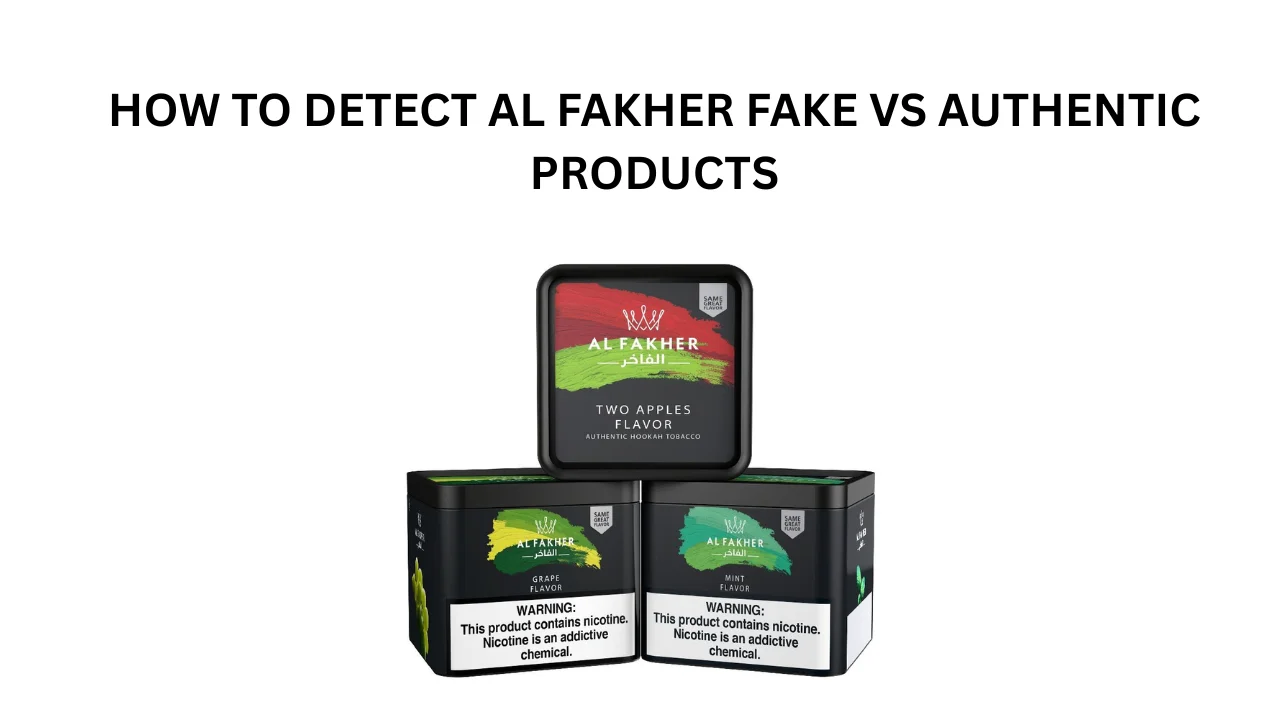
If you smoke shisha, you already know the name Al Fakher. It’s one of the most trusted hookah tobacco brands to come out of the UAE, and that popularity has made it a favorite target for counterfeiters. Fake tubs are floating around in markets, on random websites, and sometimes even in shops that look legit at first glance.
The problem isn’t just a wasted purchase. Counterfeit shisha tobacco can carry unregulated nicotine levels, unknown chemicals, and inconsistent ingredients that a real production line would never allow. So before you pack your next bowl, it’s worth knowing exactly what separates the real thing from a cheap copy.
This guide walks through the practical checks anyone can do at home, no lab equipment needed.
Why Al Fakher Gets Copied So Often
Al Fakher has been making shisha tobacco since 1999, and it built its reputation on the “Blonde Leaf” style — a low-nicotine, honey-based blend that smokes smooth without overwhelming the throat. Because it’s sold worldwide and recognized everywhere, it’s also one of the easiest brands for counterfeiters to imitate. The packaging is well known, the logo is simple, and demand is high, which is exactly the recipe scammers look for.
The good news is that genuine Al Fakher has several fixed production standards. Once you know what they look like, spotting a fake gets a lot easier.
1. Check the Packaging Details First
Packaging is where most fakes fall apart, because copying a design exactly is harder than it looks.
- Print quality: Authentic boxes have crisp, sharp text and clean edges. If the logo looks slightly blurry, pixelated, or the colors seem a shade off, that’s a warning sign.
- Spelling and fonts: Counterfeiters often rush the details. Look closely at the font used for “Al Fakher” and check for typos anywhere on the box — these show up more than people expect.
- The hologram seal: Genuine packs usually carry a shiny, 3D holographic seal somewhere on the box. Fakes either skip this entirely or use a flat, printed imitation that doesn’t shift with light.
- Batch codes: Real tubs include a printed batch or production code. If that code is missing, smudged, or clearly stuck on as an afterthought, be cautious.
- QR codes: Newer Al Fakher packaging includes a scannable QR code that links back to verification information. If it doesn’t scan, or it leads somewhere unrelated to the brand, that’s a red flag.
Packaging size and material matter too. Al Fakher’s 50g boxes use a laminated foil pouch wrapped in cellophane, the 250g size comes in a resealable plastic tub with a safety seal under the cap, and the 250g Golden Line ships in a clear-sided plastic box sealed with a branded sticker. If what you’re holding doesn’t match any of these standard formats, that’s worth a second look.
2. Look at the Tobacco Itself
Once the box is open, the tobacco should tell its own story.
Genuine Al Fakher has a uniform, medium-fine cut with a consistent reddish-brown hue across most flavors. It should look moist but never soggy, and there shouldn’t be a pile of stems or leftover stalk pieces mixed in. If the tobacco looks overly dry, oddly clumped, or has visible plant debris, that’s not the batch consistency Al Fakher is known for.
Texture matters as much as color. Real product feels slightly sticky from the molasses content but never wet enough to drip, and it shouldn’t feel gritty or sandy.
3. Trust Your Nose
Smell is one of the fastest ways to catch a fake, and it doesn’t require any tools.
Authentic Al Fakher has a strong, clean scent that matches its labeled flavor right when you open the pack. A fake often smells faint, artificial, or “off” — sometimes chemical, sometimes just flat and generic, like the flavor was sprayed on rather than blended in. If a Double Apple tub barely smells like apple at all, that’s a strong sign something’s wrong.
4. Compare Nicotine and Ingredient Labels
This is one of the more serious checks, because it goes beyond taste and touches actual health risk.
Al Fakher shisha typically sits around 0.05% nicotine, which is why sessions feel smooth rather than harsh. Counterfeit products don’t follow any manufacturing standard, so nicotine content can swing wildly higher or lower than what’s printed on the box. If the label lists a nicotine percentage that seems unusually high, or there’s no nicotine information at all, don’t risk it.
Also check that the ingredient list mentions the expected components: tobacco, molasses, glycerin, and flavoring. A label that’s vague, missing entirely, or written with obvious grammar mistakes usually means the packaging wasn’t produced by the actual brand.
5. Buy Only From Authorized Sellers
Honestly, this is the single biggest factor in avoiding fakes altogether. Even the most careful inspection can miss a well-made counterfeit, so where you buy from matters just as much as what you’re looking at.
Stick to retailers that are known, established, and transparent about their sourcing. In the UAE, for example, al fakher dubai sellers with a proper storefront list the full flavor range with clear pricing and product details, which is generally a good sign compared to unmarked listings on marketplaces with no seller history. Authorized sellers also tend to rotate stock frequently, so you’re not buying tobacco that’s been sitting around losing freshness — or worse, sitting around because it never sells due to being an obvious knockoff.
A few practical buying habits:
- Avoid prices that look too good to be true. Genuine Al Fakher has a fairly consistent price range, and a tub priced dramatically lower than everywhere else is a warning sign, not a bargain.
- Check seller reviews and how long the store has been operating.
- Avoid sellers who can’t answer basic questions about batch codes or sourcing.
- If buying in person, ask to see the box before purchase — sealed doesn’t always mean safe if the seal itself is fake.
6. Storage Also Tells a Story
Even genuine Al Fakher can be mishandled to the point where it seems fake. Heat, sunlight, and moisture degrade tobacco quickly, so a real product stored badly can end up dry, discolored, or weirdly textured. This is why buying from stores with proper turnover and storage conditions matters as much as verifying the brand itself. Once you get it home, moving the tobacco into an airtight glass jar and keeping it away from heat and light will preserve it properly, ideally used within two to three weeks of opening for the best flavor.
Quick Recap: Fake vs Authentic Checklist
| Check | Authentic Al Fakher | Possible Fake |
|---|---|---|
| Print & logo | Sharp, clean, consistent | Blurry, pixelated, off-color |
| Hologram seal | Shiny, shifts with light | Missing or flat/printed |
| Batch code | Clearly printed | Missing or smudged |
| Tobacco texture | Fine, moist, uniform color | Dry, stemmy, clumped |
| Smell | Strong, matches flavor | Faint or chemical |
| Nicotine label | Around 0.05%, clearly listed | Missing or unusually high |
| Price | Consistent with market rate | Suspiciously cheap |
| Seller | Established, transparent | Unknown, no history |
Final Thoughts
Spotting a fake Al Fakher product comes down to slowing down and actually looking — at the packaging, the tobacco, the smell, and most importantly, where it’s coming from. None of these checks take more than a minute or two, but together they’ll save you from a bad session and a genuine health risk from unregulated ingredients.
The simplest long-term fix is buying from sellers who’ve built a reputation on stocking the real thing. Whether that’s a local shop or a trusted al fakher shisha supplier with a solid track record online, sourcing matters more than any single check on this list.